Catalog / fish / Black-winged hatchetfish
fish · Characidae
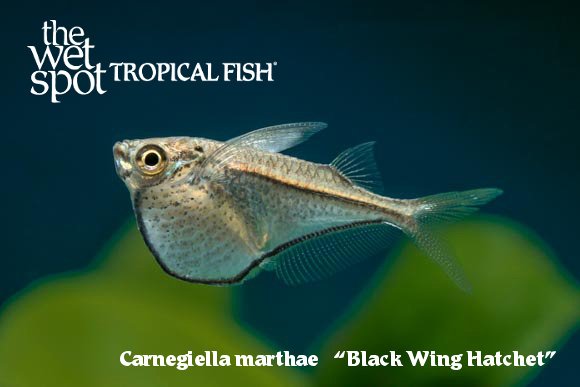
Black-winged hatchetfish
Carnegiella marthae
Wild range: Orinoco and Negro regions (South America)
At a glance: Black-winged hatchetfish care
Compiled reference information. Review the care notes and original sources below.
What temperature is listed for Black-winged hatchetfish?
The compiled profile lists 24.0–30.0 °C for Black-winged hatchetfish (Carnegiella marthae). Check the original sources below for context and differing recommendations.
What tank size is listed for Black-winged hatchetfish?
The profile lists a minimum tank volume of 14.3 US gallons (54.0 liters). Volume alone does not establish suitability; consider dimensions, group size and other inhabitants alongside the full care notes.
What pH is listed for Black-winged hatchetfish?
The compiled profile lists a pH of 4.0–7.0. Review the cited care sources alongside the other water parameters in this profile.
Natural habitat
Black-winged hatchetfish are found in slow-moving streams and ponds as well as dark, heavily vegetated waterways with little light. They thrive in soft, low carbonate waters with a brownish tinge.
Where they are found
This species is native to Venezuela, adapting to its specific environmental conditions where it prefers shaded areas under floating plants.
Aquarium care
It’s crucial to maintain a wide tank with a secure lid, as these fish are known jumpers. They prefer dark, densely planted environments mimicking their natural habitat, with floating plants and driftwood.
Feeding
Feeding should consist mainly of live or frozen foods, such as small crustaceans and insect larvae. Flake foods are not recommended as they can negatively affect their health.
Compatibility
The Blackwing Hatchetfish is best kept in groups of at least six and can coexist with other peaceful fish. Care should be taken when including shrimp, as fry may be eaten.
Breeding
Breeding these fish is challenging, and while female hatchetfish display a more rounded body than males, reliable breeding accounts for this species in captivity are currently lacking.
Sources
Compiled from multiple independent care sheets — not copied from a single site.