Catalog / invertebrates / Black Sulawesi snail
invertebrate · Pachychilidae
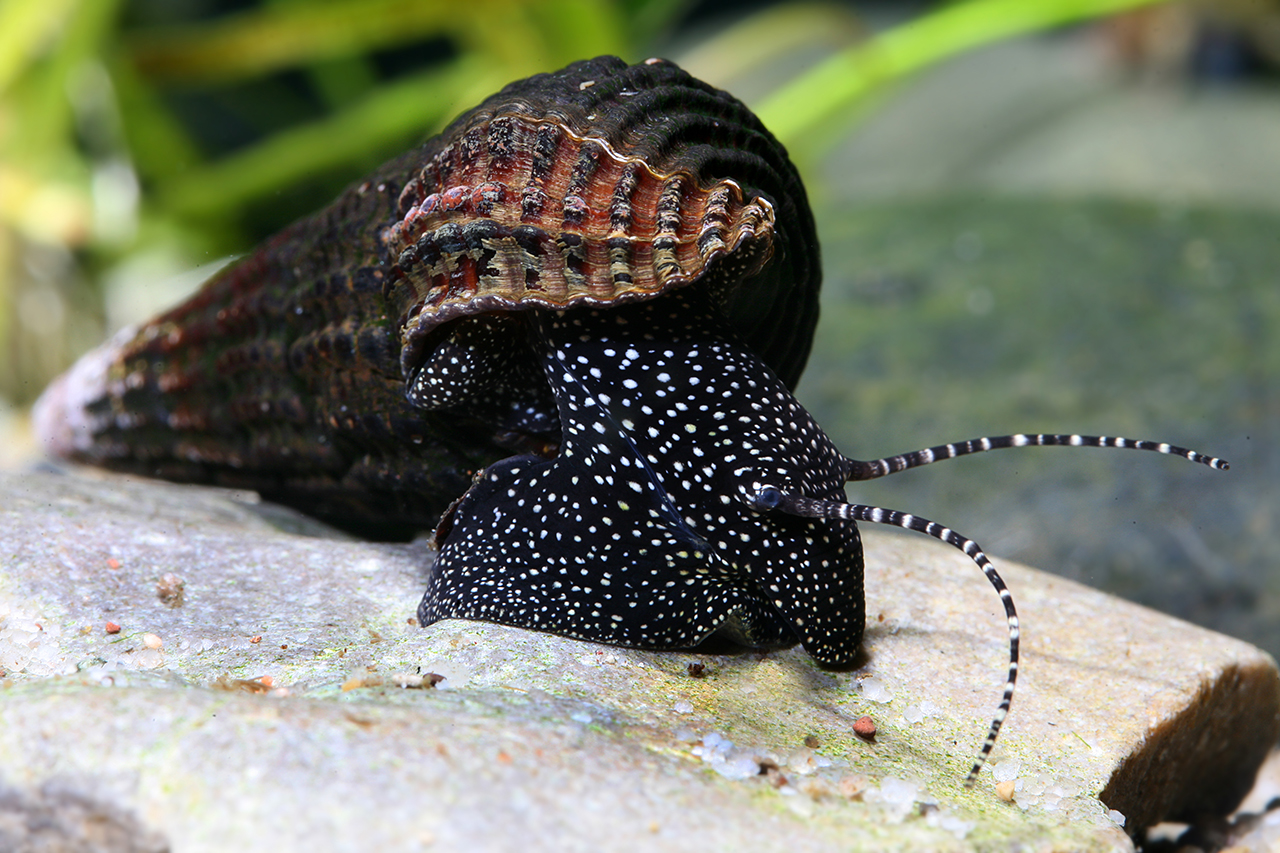
Black Sulawesi snail
Tylomelania patriarchalis
Wild range: Southeast Asia (Asia)
At a glance: Black Sulawesi snail care
Compiled reference information. Review the care notes and original sources below.
What temperature is listed for Black Sulawesi snail?
The compiled profile lists 21.0–29.0 °C for Black Sulawesi snail (Tylomelania patriarchalis). Check the original sources below for context and differing recommendations.
What tank size is listed for Black Sulawesi snail?
The profile lists a minimum tank volume of 10.0 US gallons (38.0 liters). Volume alone does not establish suitability; consider dimensions, group size and other inhabitants alongside the full care notes.
What pH is listed for Black Sulawesi snail?
The compiled profile lists a pH of 7.0–8.5. Review the cited care sources alongside the other water parameters in this profile.
Natural habitat
Sulawesi snails are native to freshwater environments in Indonesia, particularly in the Sulawesi region, where they inhabit lakes and slow-moving streams. They thrive in warm, stable conditions and require specific water parameters to flourish.
Where they are found
Primarily found in the lakes of Sulawesi, these snails exhibit a variety of colors, including bright orange and yellow, making them a visually appealing addition to aquariums.
Aquarium care
Tylomelania snails require a spacious aquarium with a sandy or soft substrate to prevent them from getting stuck. They should be kept in groups, and a gentle flow is ideal for their habitat.
Feeding
Feed Sulawesi snails a varied diet including soft aquarium plants, blanched vegetables high in calcium like peas and carrots, homemade snail food mixes, and algae. Providing a nutritious diet is essential for their growth and shell health.
Compatibility
They are generally peaceful and can be kept in community setups, but care should be taken with aggressive species.
Breeding
Rabbit snails have a slow reproductive rate. They do not reproduce asexually and require one male and one female to breed, typically laying one or two eggs every four to six weeks.
Sources
Compiled from multiple independent care sheets — not copied from a single site.