Catalog / fish / Black skirt tetra
fish · Characidae
Black skirt tetra
Gymnocorymbus ternetzi
Wild range: Brazil, Paraguay, Bolivia (South America)
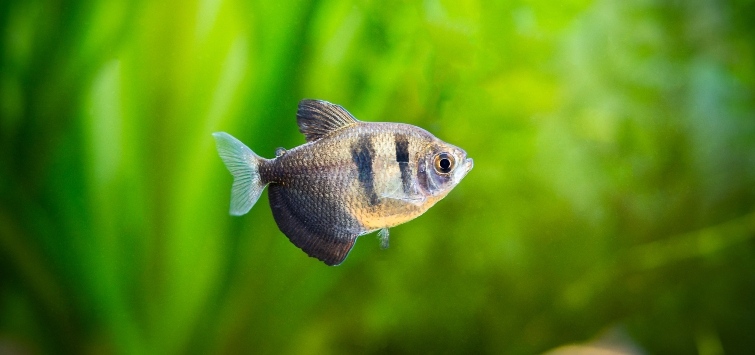
At a glance: Black skirt tetra care
Compiled reference information. Review the care notes and original sources below.
What temperature is listed for Black skirt tetra?
The compiled profile lists 21.0–28.0 °C for Black skirt tetra (Gymnocorymbus ternetzi). Check the original sources below for context and differing recommendations.
What tank size is listed for Black skirt tetra?
The profile lists a minimum tank volume of 20.0 US gallons (75.7 liters). Volume alone does not establish suitability; consider dimensions, group size and other inhabitants alongside the full care notes.
What pH is listed for Black skirt tetra?
The compiled profile lists a pH of 6.0–7.5. Review the cited care sources alongside the other water parameters in this profile.
Natural habitat
The Black Skirt Tetra is native to slow-moving rivers and floodplain waterways in Brazil, Paraguay, and Bolivia. They thrive in warm, slightly acidic waters, often found in areas with abundant submerged vegetation.
Where they are found
Black Skirt Tetras are found primarily in Brazil, inhabiting slow-moving waterways rich in submerged plants. They prefer stable, warm waters with moderate vegetation to hide among.
Aquarium care
Keep the Black Skirt Tetra in schools of at least 6-8 to minimize any aggressive tendencies. Provide a well-planted aquarium with ample swimming space and gentle filtration. Regular water changes are important to maintain water quality.
Feeding
Feed Black Skirt Tetras a varied diet comprising high-quality flakes, pellets, and occasional live or frozen foods like brine shrimp and bloodworms. It's important to feed them 1-2 times daily, providing only as much food as they can consume within a few minutes to prevent water contamination.
Compatibility
Black Skirt Tetras are compatible with many community fish, including other tetras and peaceful species like Corydoras and Rasboras. Avoid keeping them with slow-moving fish that have long fins, as they may nip at their fins.
Breeding
Breeding occurs in soft, slightly acidic water, preferably with spawning mops for egg scattering. Adults do not guard their eggs, and the fry generally hatch within 24-36 hours.
Sources
Compiled from multiple independent care sheets — not copied from a single site.