Catalog / fish / Black neon tetra
fish · Acestrorhamphidae
Black neon tetra
Hyphessobrycon herbertaxelrodi
Wild range: Paraguay River basin (South America)
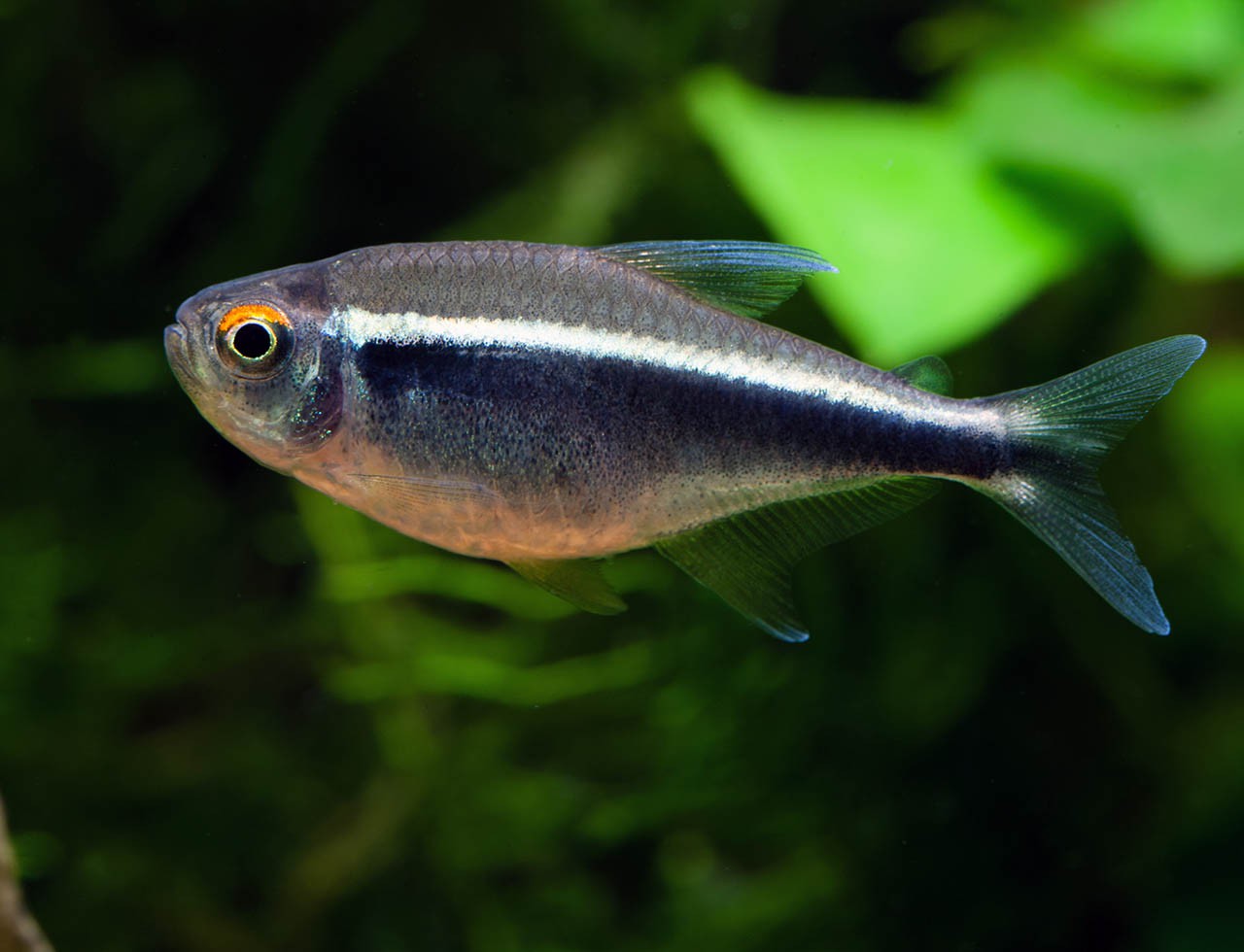
At a glance: Black neon tetra care
Compiled reference information. Review the care notes and original sources below.
What temperature is listed for Black neon tetra?
The compiled profile lists 20.0–28.0 °C for Black neon tetra (Hyphessobrycon herbertaxelrodi). Check the original sources below for context and differing recommendations.
What tank size is listed for Black neon tetra?
The profile lists a minimum tank volume of 15.9 US gallons (60.0 liters). Volume alone does not establish suitability; consider dimensions, group size and other inhabitants alongside the full care notes.
What pH is listed for Black neon tetra?
The compiled profile lists a pH of 5.0–7.5. Review the cited care sources alongside the other water parameters in this profile.
Natural habitat
Hyphessobrycon herbertaxelrodi inhabits the freshwater environments of the Paraguay River basin, thriving in waters with a pH range of 5.5 to 7.5 and a hardness up to 15 dGH.
Where they are found
These fish inhabit diverse water conditions, from tannin-stained to clear waters, and are often abundant in the Pantanal wetlands in Brazil, Bolivia, and Paraguay.
Aquarium care
To care for Black neon tetras in an aquarium, provide a minimum tank size of 60 cm and ensure that they are kept in groups of five or more. A well-planted tank with gentle water flow and medium lighting is ideal.
Feeding
In the aquarium, black neon tetras thrive on a varied diet, including a small carnivore staple and occasional live and frozen foods such as Daphnia. Providing a balanced diet will keep them healthy and active.
Compatibility
Black neon tetras are excellent community fish, ideally kept with other small schooling fish or peaceful species. It's advisable to avoid larger predators and slow-moving fish with long fins to ensure peaceful coexistence in the aquarium.
Breeding
Breeding occurs in open water, with eggs hatching within 24 to 30 hours. It's important to maintain a separate breeding tank to increase the chances of successful hatching and rearing of fry.
Sources
Compiled from multiple independent care sheets — not copied from a single site.