fish · Characidae
Bentos tetra
Hyphessobrycon bentosi
Wild range: Amazon Basin (South America)
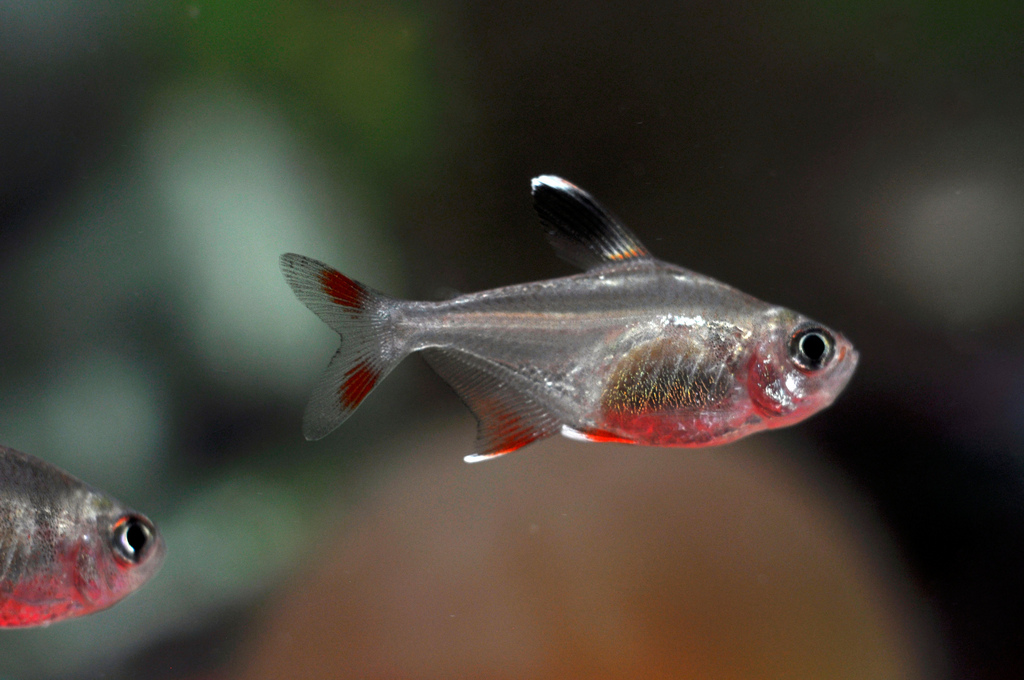
At a glance: Bentos tetra care
Compiled reference information. Review the care notes and original sources below.
What temperature is listed for Bentos tetra?
The compiled profile lists 23.0–28.0 °C for Bentos tetra (Hyphessobrycon bentosi). Check the original sources below for context and differing recommendations.
What tank size is listed for Bentos tetra?
The profile lists a minimum tank volume of 15.9 US gallons (60.0 liters). Volume alone does not establish suitability; consider dimensions, group size and other inhabitants alongside the full care notes.
What pH is listed for Bentos tetra?
The compiled profile lists a pH of 5.8–8.0. Review the cited care sources alongside the other water parameters in this profile.
Natural habitat
Ornate tetras are native to the Amazon Basin where they inhabit slow-moving waters with plenty of vegetation. They thrive in slightly acidic to alkaline waters, making them well-suited for a variety of aquarium setups.
Where they are found
This species originates from the upper waters of the Río Paraguay and upper Madeira/Guaporé drainages, where they inhabit slow-moving waters typically surrounded by dense vegetation.
Aquarium care
To maintain a suitable environment for ornate tetras, ensure a minimum tank size of 100 liters with a gentle flow. The tank should be well-planted to provide hiding spots, and the water conditions should closely match their natural habitat, with temperatures between 24°C and 28°C, a pH range of 5.8 to 7, and a hardness of 5 to 15 dGH.
Feeding
Ornate tetras are omnivores; providing a varied diet is essential. They can be fed high-quality flake foods, granules, and occasional live or frozen foods such as bloodworms. This variety ensures they receive all necessary nutrients for growth and health.
Compatibility
Ornate tetras are generally peaceful and best kept in groups of at least ten. They may cohabit with other small, non-aggressive species, but should be kept away from larger fish and crustaceans that may pose a predatory threat.
Breeding
Breeding requires soft, slightly acidic water with dense vegetation for egg scattering. Parents should be removed after spawning as they do not provide care for eggs or fry. Eggs hatch in approximately 24-36 hours, and fry are free-swimming after 3-4 days and should be fed with infusoria and then finely crushed flakes.
Sources
Compiled from multiple independent care sheets — not copied from a single site.