fish · Cyprinidae
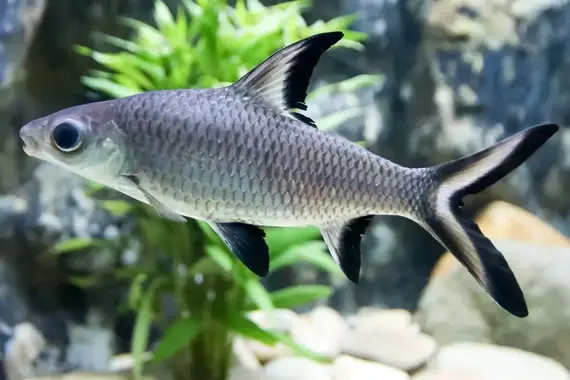
Bala shark
Balantiocheilos melanopterus
Wild range: Southeast Asia (Asia)
At a glance: Bala shark care
Compiled reference information. Review the care notes and original sources below.
What temperature is listed for Bala shark?
The compiled profile lists 23.0–27.0 °C for Bala shark (Balantiocheilos melanopterus). Check the original sources below for context and differing recommendations.
What tank size is listed for Bala shark?
The profile lists a minimum tank volume of 100.0 US gallons (380.0 liters). Volume alone does not establish suitability; consider dimensions, group size and other inhabitants alongside the full care notes.
What pH is listed for Bala shark?
The compiled profile lists a pH of 6.5–8.0. Review the cited care sources alongside the other water parameters in this profile.
Natural habitat
Bala Sharks are native to fast-flowing rivers and streams in Southeast Asia, preferring clean, well-oxygenated waters. Over time, they have become rare or extinct in many of their original habitats due to environmental changes and overfishing.
Where they are found
Natural populations are dwindling due to urbanization, dam construction, and habitat degradation.
Aquarium care
Bala Sharks are relatively easy to care for, but they require a spacious aquarium of at least 120 gallons due to their potential size of up to 30 cm. Regular water changes and a good filtration system are essential to keep their environment clean and stable. They thrive in well-maintained tanks with hiding spots for comfort.
Feeding
Rainbow Sharks are omnivorous and thrive on a varied diet including high-quality pellets, flakes, and occasional live or frozen foods such as brine shrimp and bloodworms.
Compatibility
As they mature, Rainbow Sharks can become territorial, especially towards their own species. It is best to keep them alone or with other robust fish that can hold their own.
Breeding
Breeding Bala Sharks in captivity is quite challenging. They require special hormone treatments to induce spawning, along with a separate breeding tank. It's important to monitor the sexes and have a group of them to ensure successful reproduction.
Sources
Compiled from multiple independent care sheets — not copied from a single site.