Catalog / invertebrates / Green babaulti shrimp
invertebrate · Atyidae
Green babaulti shrimp
Caridina cf. babaulti
Wild range: South Asia (Asia)
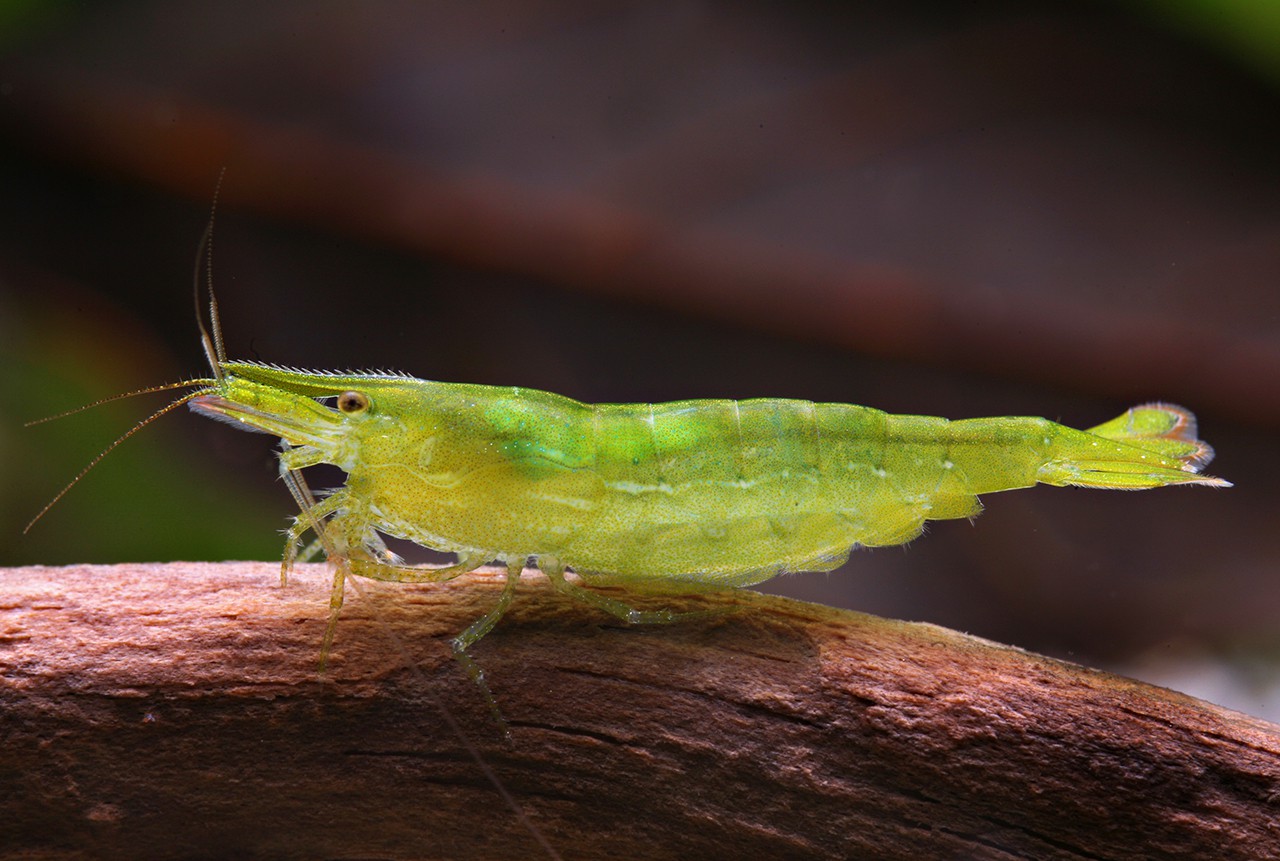
At a glance: Green babaulti shrimp care
Compiled reference information. Review the care notes and original sources below.
What temperature is listed for Green babaulti shrimp?
The compiled profile lists 18.3–28.0 °C for Green babaulti shrimp (Caridina cf. babaulti). Check the original sources below for context and differing recommendations.
What tank size is listed for Green babaulti shrimp?
The profile lists a minimum tank volume of 5.0 US gallons (18.9 liters). Volume alone does not establish suitability; consider dimensions, group size and other inhabitants alongside the full care notes.
What pH is listed for Green babaulti shrimp?
The compiled profile lists a pH of 6.5–7.8. Review the cited care sources alongside the other water parameters in this profile.
Natural habitat
Green Babaulti shrimp thrive in freshwater streams and rivers typically found in South Asia, particularly in India. Their habitat includes areas with plenty of vegetation and biofilm, where they can feed and find shelter.
Where they are found
The species is distributed from central India through Malaya and as far west as Iraq. The exact boundaries of their natural range are still not fully understood due to their recent classification and variability among populations.
Aquarium care
Zebra babaulti shrimp are hardy and easy to care for. They thrive in well-established tanks with high water quality and stable parameters. Frequent water changes are essential to maintain low levels of toxins such as ammonia and nitrites.
Feeding
These shrimp are omnivores, primarily feeding on algae and biofilm. High-quality shrimp food can supplement their diet if natural food sources are insufficient.
Compatibility
Zebra babaulti shrimp are peaceful and can be kept with other small, gentle fish or shrimp species. Avoid keeping them with aggressive or fast-swimming fish, as they can easily become stressed or injured.
Breeding
Breeding Caridina cf. babaulti involves females carrying eggs in a brood pouch without a planktonic larval stage. The incubation period lasts approximately 30 days, after which fully formed miniatures of adults emerge. Optimal conditions help in successful breeding outcomes.
Sources
Compiled from multiple independent care sheets — not copied from a single site.