Catalog / invertebrates / Australian red claw crayfish
invertebrate · Parastacidae
Australian red claw crayfish
Cherax quadricarinatus
Wild range: Northern Australia and Papua New Guinea (Australia)
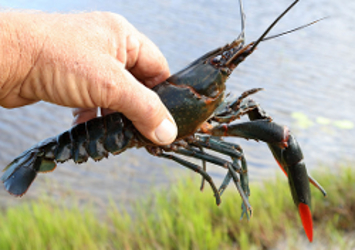
At a glance: Australian red claw crayfish care
Compiled reference information. Review the care notes and original sources below.
What temperature is listed for Australian red claw crayfish?
The compiled profile lists 18.0–31.0 °C for Australian red claw crayfish (Cherax quadricarinatus). Check the original sources below for context and differing recommendations.
What tank size is listed for Australian red claw crayfish?
The profile lists a minimum tank volume of 26.4 US gallons (100.0 liters). Volume alone does not establish suitability; consider dimensions, group size and other inhabitants alongside the full care notes.
What pH is listed for Australian red claw crayfish?
The compiled profile lists a pH of 6.5–8.5. Review the cited care sources alongside the other water parameters in this profile.
Natural habitat
Redclaw crayfish inhabit a range of freshwater environments including still ponds, small creeks, isolated rock pools, and fast-flowing rivers. They are adapted to a variety of conditions and can thrive in environments with low dissolved oxygen levels.
Where they are found
Indigenous to Australia, specifically found in the rivers of north-west Queensland and the Northern Territory. This species has adapted to local seasonal changes, which may involve significant fluctuations in water temperature and quality.
Aquarium care
To ensure the well-being of Red-clawed Crayfish in captivity, provide a spacious aquarium with ample hiding spots made from rocks, driftwood, or PVC tubes. Use a fine substrate to allow for some natural behavior, like burrowing, and maintain moderate water movement with efficient filtration. Regular partial water changes are essential to keep the environment clean and healthy. Be cautious about tankmates, as these crayfish are territorial and can be aggressive.
Feeding
They are omnivorous and should be provided a diet rich in both plant matter and protein sources such as sinking pellets, vegetables, and occasional live food like worms or crustaceans.
Compatibility
Red-clawed Crayfish are best kept solitary or in pairs in a spacious tank with plenty of hiding places. They can be aggressive and are not suitable for community aquariums with smaller fish or other invertebrates.
Breeding
Females are known to brood their eggs for a period of 6-10 weeks, depending on temperature, and hatchlings remain attached to the mother for several weeks. An abundance of shelter in the aquarium will facilitate breeding success and reduce stress during this period.
Sources
Compiled from multiple independent care sheets — not copied from a single site.