Catalog / invertebrates / Australian Amano shrimp
invertebrate · Atyidae
Australian Amano shrimp
Caridina typus
Wild range: Southeast Australia (Australia)
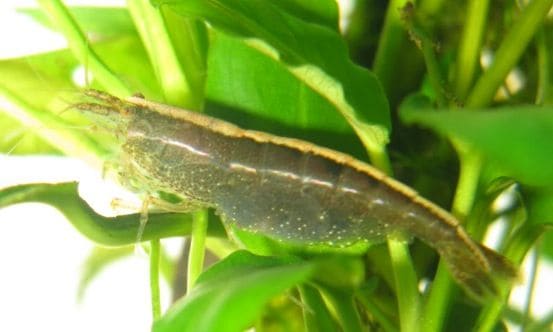
At a glance: Australian Amano shrimp care
Compiled reference information. Review the care notes and original sources below.
What temperature is listed for Australian Amano shrimp?
The compiled profile lists 15.0–28.0 °C for Australian Amano shrimp (Caridina typus). Check the original sources below for context and differing recommendations.
What tank size is listed for Australian Amano shrimp?
The profile lists a minimum tank volume of 5.3 US gallons (20.0 liters). Volume alone does not establish suitability; consider dimensions, group size and other inhabitants alongside the full care notes.
What pH is listed for Australian Amano shrimp?
The compiled profile lists a pH of 6.0–8.0. Review the cited care sources alongside the other water parameters in this profile.
Natural habitat
Australian Amano Shrimps thrive in freshwater environments, particularly in rivers and streams where they play a crucial role in maintaining water quality through their scavenging activities. They prefer areas with gentle water flow and plenty of vegetation to hide in.
Where they are found
The species is widely distributed in coastal regions, showcasing its ecological resilience and adaptability. As a result, Caridina typus can tolerate a range of water parameters, which makes it appealing to aquarium enthusiasts.
Aquarium care
A well-established aquarium with live plants is ideal for Amano Shrimp, as they provide grazing surfaces and shelter. A gentle flow is needed to simulate their natural habitat, and it is important to ensure high dissolved oxygen levels in the water.
Feeding
Feeding can be accomplished with algae wafers, blanched vegetables, and specific shrimp foods. They are excellent scavengers and help clean up uneaten fish food.
Compatibility
Amano Shrimp are peaceful and can be kept with small, peaceful fish and other invertebrates like snails. However, larger fish such as cichlids should be avoided as they can eat the shrimp.
Breeding
Breeding Caridina typus is complex due to their requirement for both freshwater and saltwater during their life cycle. After mating, females carry eggs that hatch into planktonic larvae, necessitating a separate salinity environment for their growth until they can be transitioned back to freshwater.
Sources
Compiled from multiple independent care sheets — not copied from a single site.