Catalog / invertebrates / Assassin snail
invertebrate · Bithyniidae
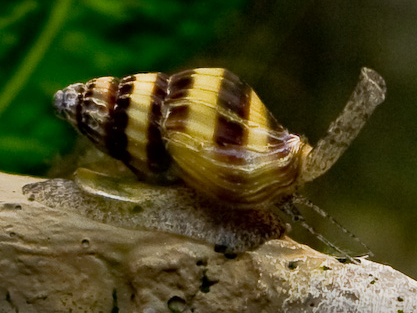
Assassin snail
Anentome helena
Wild range: Southeast Asia (Asia)
At a glance: Assassin snail care
Compiled reference information. Review the care notes and original sources below.
What temperature is listed for Assassin snail?
The compiled profile lists 22.2–28.0 °C for Assassin snail (Anentome helena). Check the original sources below for context and differing recommendations.
What tank size is listed for Assassin snail?
The profile lists a minimum tank volume of 5.0 US gallons (18.9 liters). Volume alone does not establish suitability; consider dimensions, group size and other inhabitants alongside the full care notes.
What pH is listed for Assassin snail?
The compiled profile lists a pH of 6.7–8.5. Review the cited care sources alongside the other water parameters in this profile.
Natural habitat
The Assassin Snail originates from freshwater habitats in Southeast Asia, where it thrives in calm waters with ample hiding spots. This species commonly inhabits rivers and streams, often found among submerged vegetation and substrate that allows them to burrow and search for food.
Where they are found
Originating from Southeast Asia, particularly Thailand, Vietnam, and Malaysia, these snails inhabit freshwater habitats, preying primarily on smaller snails.
Aquarium care
In captivity, they prefer a tank with plenty of hiding spots and moderate water flow. Ensure the substrate is soft and allows for burrowing, as this mimics their natural environment. Regularly monitor water parameters, as they require stable conditions for optimal health and growth.
Feeding
These snails are scavengers by nature and feed on detritus and other decomposing materials. They are also known to prey on smaller snails, making them effective at controlling nuisance snail populations, but may consume ornamental snails as well.
Compatibility
While they can coexist with some fish and invertebrates, care should be taken with smaller shrimp species and delicate snails, as Assassin Snails have been reported to consume them under certain circumstances. Caution is advised when introducing them to community tanks, especially those with smaller invertebrates.
Breeding
Assassin snails exhibit slow breeding rates, needing both male and female to reproduce. Eggs are laid individually on hard surfaces, with the incubation period lasting about 3-4 weeks, after which miniature snails emerge that are able to fend for themselves immediately.
Sources
Compiled from multiple independent care sheets — not copied from a single site.