fish · Callichthyidae
Aspidoras
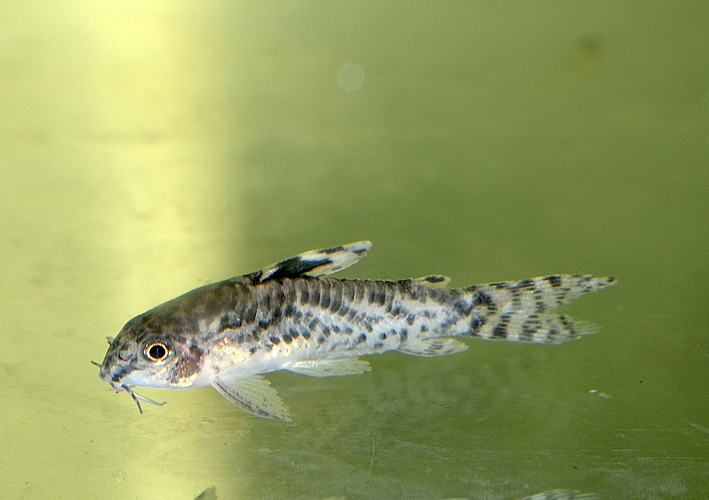
Aspidoras pauciradiatus
Wild range: Central Rio-Negro area (South America)
At a glance: Aspidoras care
Compiled reference information. Review the care notes and original sources below.
What temperature is listed for Aspidoras?
The compiled profile lists 22.0–25.0 °C for Aspidoras (Aspidoras pauciradiatus). Check the original sources below for context and differing recommendations.
What tank size is listed for Aspidoras?
The profile lists a minimum tank volume of 8.0 US gallons (30.0 liters). Volume alone does not establish suitability; consider dimensions, group size and other inhabitants alongside the full care notes.
What pH is listed for Aspidoras?
The compiled profile lists a pH of 6.0–7.2. Review the cited care sources alongside the other water parameters in this profile.
Natural habitat
The Dwarf Armored Catfish is found in the soft, acidic waters of the central Rio-Negro region. This area is characterized by slow-moving water, abundant leaf litter, and a variety of aquatic vegetation, providing a rich habitat for the species.
Where they are found
This species is primarily distributed in South America, specifically within the Upper Araguaia River basin in Brazil. It tends to inhabit the lowland areas of this river system, where it is often found amongst sandy and soft substrates.
Aquarium care
In aquariums, it's important to replicate their natural conditions, keeping the water clean and stable. A minimum tank of 100 liters is recommended, with a group of at least 10 individuals to prevent stress and promote natural behaviors. Regular water changes and maintaining suitable water parameters will ensure the health of the fish.
Feeding
These catfish are omnivorous and can be fed a varied diet of high-quality flake food, sinking pellets, and occasional live or frozen foods like daphnia or brine shrimp. They are bottom dwellers, so food should sink to ensure they can forage effectively.
Compatibility
Gastrodermus pauciradiatus is generally peaceful and safe in community tanks. However, care must be taken not to house them with larger, aggressive species or crustaceans, which may pose a threat to them.
Breeding
Breeding this species requires slightly cooler water temperatures and the introduction of a separate breeding tank. After spawning, eggs will generally adhere to surfaces, and it's advisable to remove parents once the eggs are laid to prevent them from consuming the eggs. Hatching typically occurs within a few days, depending on water temperature.
Sources
Compiled from multiple independent care sheets — not copied from a single site.