Catalog / plants / Anubias nana
plant · Araceae
Anubias nana
Anubias barteri var. nana
Wild range: West Africa (Africa)
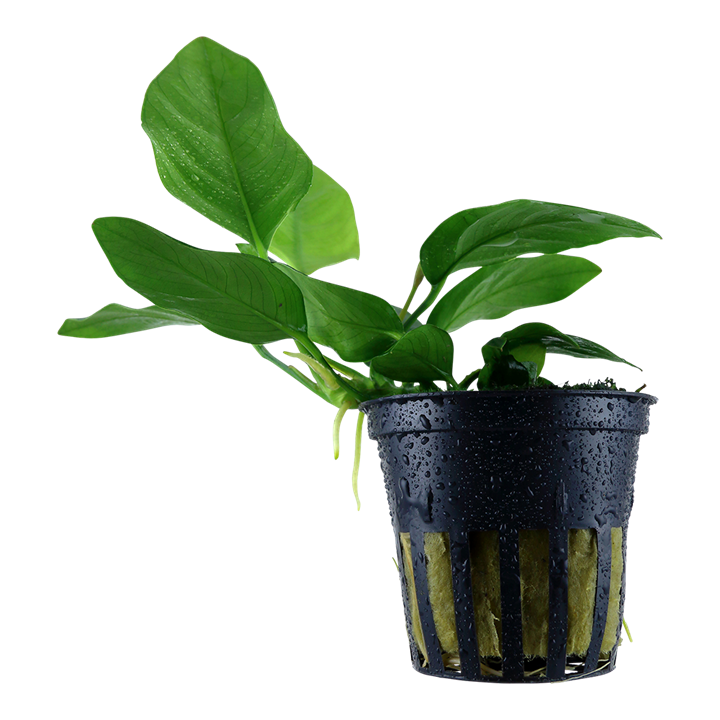
At a glance: Anubias nana care
Compiled reference information. Review the care notes and original sources below.
What temperature is listed for Anubias nana?
The compiled profile lists 22.0–28.0 °C for Anubias nana (Anubias barteri var. nana). Check the original sources below for context and differing recommendations.
What tank size is listed for Anubias nana?
The profile lists a minimum tank volume of 0.5 US gallons (2.0 liters). Volume alone does not establish suitability; consider dimensions, group size and other inhabitants alongside the full care notes.
What pH is listed for Anubias nana?
The compiled profile lists a pH of 6.0–7.5. Review the cited care sources alongside the other water parameters in this profile.
Natural habitat
Anubias barteri var. nana is commonly found in the slow-moving waters of West Africa, where it thrives attached to rocks and wood. It prefers shaded environments, making it less demanding in terms of lighting compared to other aquatic plants.
Where they are found
This plant's natural range is primarily limited to the freshwater ecosystems in Cameroon, where it can adapt to various water conditions.
Aquarium care
Anubias 'nana' is easy to care for, requiring low to moderate lighting. It should be placed in the foreground or midground of the aquarium and can be attached to rocks or driftwood. Ensure that the rhizome is above the substrate to prevent rot.
Feeding
The Dwarf Anubias does well with low to moderate nutrient levels. It can benefit from occasional liquid fertilizers, but ensure it does not become overwhelmed by nutrient-rich conditions as it is a slow grower.
Compatibility
Dwarf Anubias is compatible with a wide variety of peaceful fish and invertebrates, as it is not palatable to herbivorous species. It can serve as a safe hiding spot for smaller fish while enhancing the aesthetic of the tank.
Breeding
Propagation can occur through rhizome division. When the plant reaches a certain size, new growths can be separated and replanted.
Sources
Compiled from multiple independent care sheets — not copied from a single site.