Catalog / plants / Anubias barteri
plant · Araceae
Anubias barteri
Anubias barteri
Wild range: Cameroon (Africa)
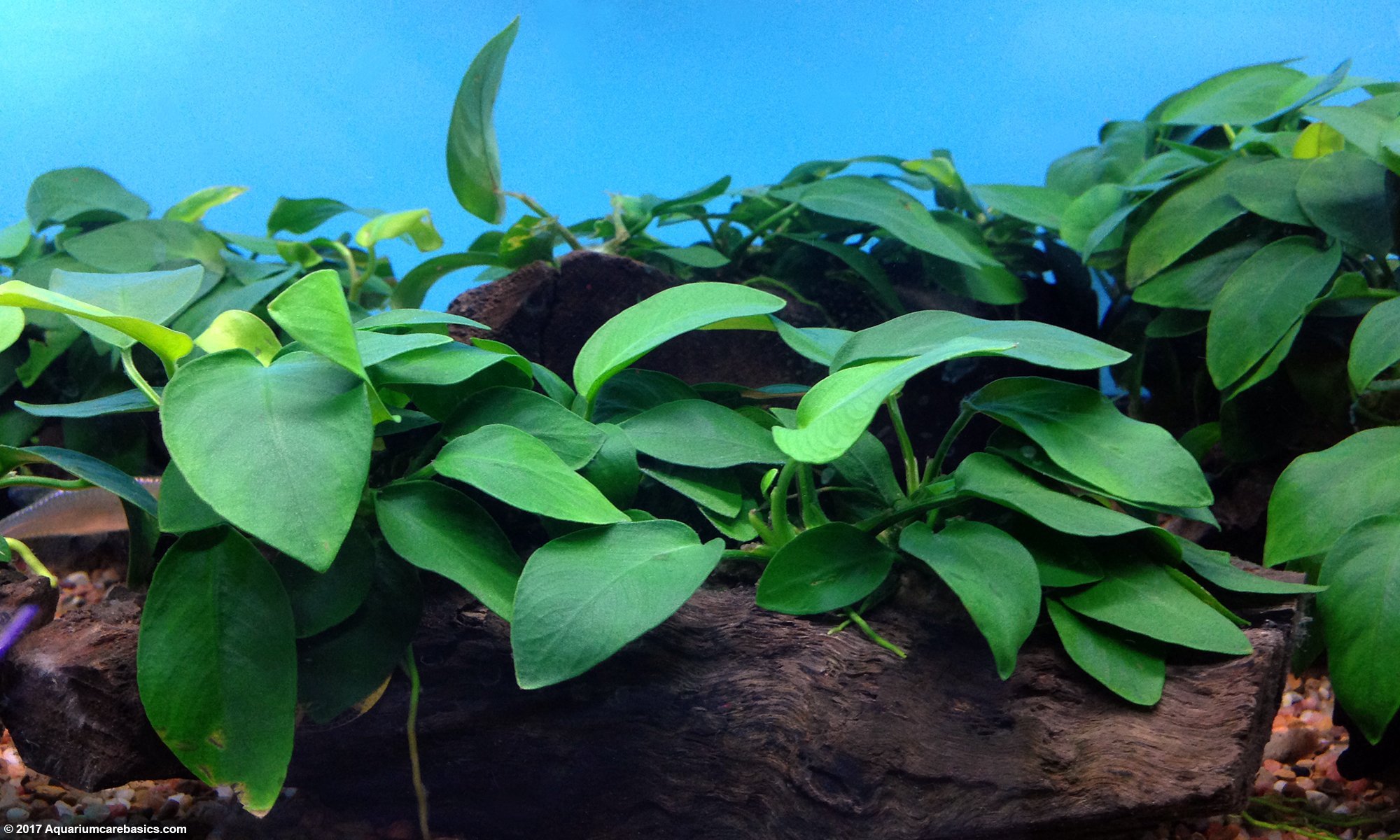
At a glance: Anubias barteri care
Compiled reference information. Review the care notes and original sources below.
What temperature is listed for Anubias barteri?
The compiled profile lists 22.0–29.0 °C for Anubias barteri (Anubias barteri). Check the original sources below for context and differing recommendations.
What tank size is listed for Anubias barteri?
The profile lists a minimum tank volume of 5.0 US gallons (20.0 liters). Volume alone does not establish suitability; consider dimensions, group size and other inhabitants alongside the full care notes.
What pH is listed for Anubias barteri?
The compiled profile lists a pH of 6.0–8.0. Review the cited care sources alongside the other water parameters in this profile.
Natural habitat
Anubias barteri var. nana thrives in a variety of freshwater environments, predominantly found in shady areas of rivers and streams in Cameroon. It’s known for its resilience and ability to flourish in low light, making it an ideal choice for many aquarium setups.
Where they are found
Distribution includes various habitats within tropical regions of Africa, where Anubias can adapt to a range of water parameters and light levels.
Aquarium care
In the aquarium, Anubias barteri var. nana should be attached to rocks or driftwood using fishing line until it securely anchors itself. Care must be taken not to bury the rhizome, as this can lead to rot. It prefers low to moderate light conditions and can tolerate a range of water parameters.
Feeding
Anubias primarily absorb nutrients from the water, and in many cases, they can thrive without additional fertilization. Adding liquid fertilizers rich in potassium and iron can enhance their growth, especially in substrate.
Compatibility
Anubias are suitable for community tanks as they are peaceful and can coexist with a wide range of fish species, including smaller fish, algae-eating snails, and shrimp. They can withstand some nibbling from larger fish due to their thick leaves.
Breeding
Anubias barteri var. nana reproduces vegetatively by producing new rhizomes, which can be separated and replanted to propagate the plant. This method is simple and ensures that the characteristics of the parent plant are maintained.
Sources
Compiled from multiple independent care sheets — not copied from a single site.