fish · Osphronemidae
Betta antoni
Betta antoni
Wild range: Southeast Asia (Asia)
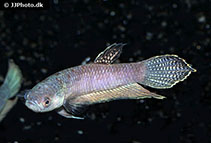
At a glance: Betta antoni care
Compiled reference information. Review the care notes and original sources below.
What temperature is listed for Betta antoni?
The compiled profile lists 24.0–29.0 °C for Betta antoni (Betta antoni). Check the original sources below for context and differing recommendations.
What tank size is listed for Betta antoni?
The profile lists a minimum tank volume of 5.0 US gallons (18.0 liters). Volume alone does not establish suitability; consider dimensions, group size and other inhabitants alongside the full care notes.
What pH is listed for Betta antoni?
The compiled profile lists a pH of 6.0–6.5. Review the cited care sources alongside the other water parameters in this profile.
Natural habitat
Betta antoni is a Bornean mouthbrooding fighting fish from the lower Kapuas basin in West Kalimantan, Indonesia, recorded from tributaries such as the Sekayam and Melawi.
Where they are found
Endemic to the lower Kapuas basin in West Kalimantan (Kalimantan Barat), Indonesian Borneo.
Aquarium care
Creating a suitable habitat for Betta fish involves maintaining water temperatures between 24°C to 27°C, and ensuring that the tank is equipped with a gentle filter to enhance water quality without generating strong currents. The tank should ideally be at least 5 gallons to support stable conditions. Regular water changes are crucial to prevent the buildup of toxins.
Feeding
Feed your Betta fish once daily, offering high-quality pellets and sometimes supplementing with frozen or freeze-dried food like bloodworms. Careful not to overfeed to prevent digestive issues.
Compatibility
Betta fish are territorial and should not be housed with other male Bettas or fish with similar fins to avoid aggression. Female Bettas can sometimes coexist in sororities if the tank is large enough and they are introduced properly. Suitable companions include peaceful species like neon tetras or small rasboras.
Breeding
A paternal mouthbrooder of the Betta akarensis group. After spawning, the male holds the eggs in his mouth until he releases free-swimming fry, typically after about 12–17 days. It does not build a bubble nest; give the pair a quiet, covered tank and leave the brooding male undisturbed.
Sources
Compiled from multiple independent care sheets — not copied from a single site.