Catalog / invertebrates / Amazon zebra shrimp
invertebrate · Palaemonidae
Amazon zebra shrimp
Euryrhynchus amazoniensis
Wild range: Amazon Basin (South America)
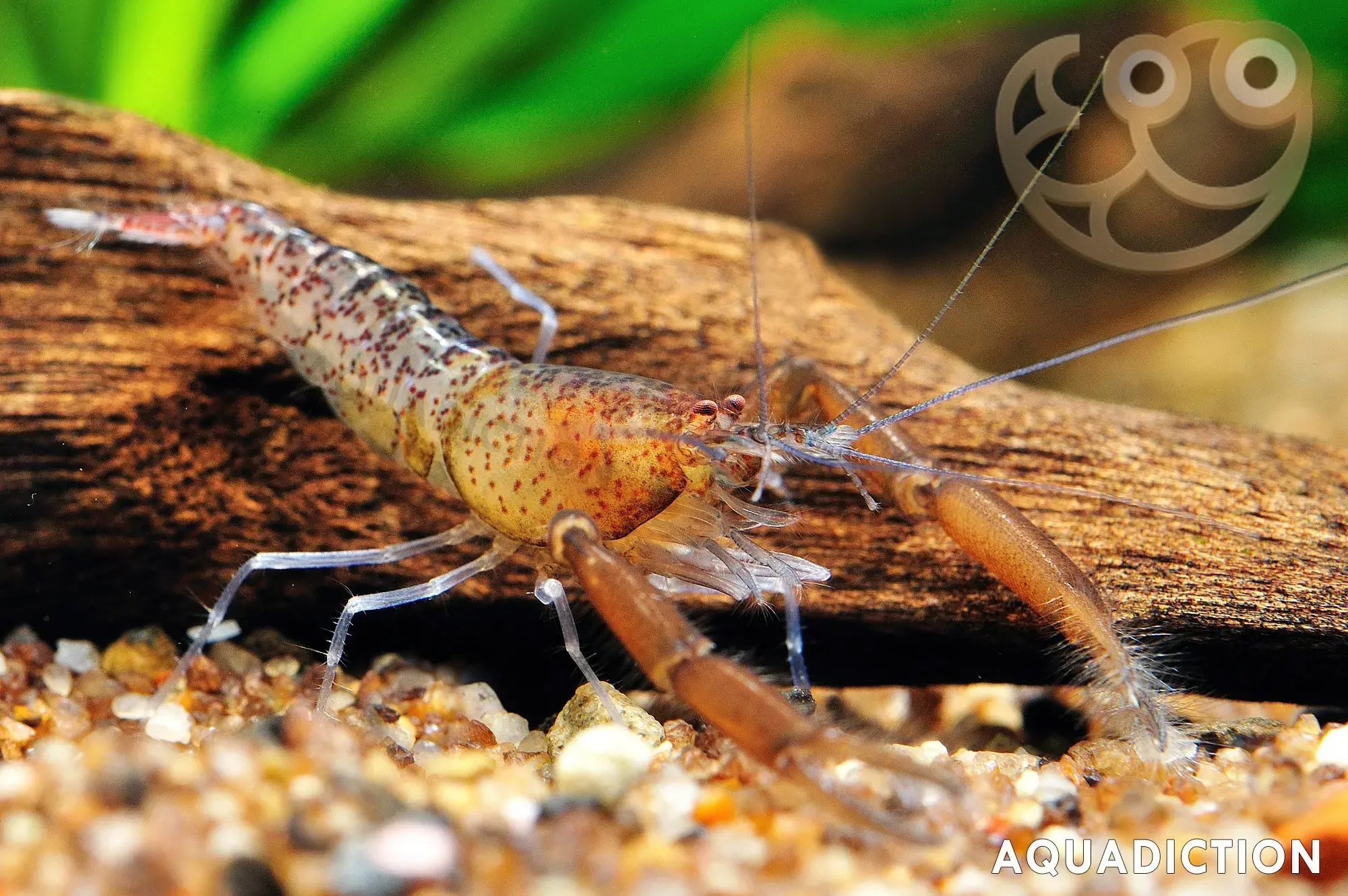
At a glance: Amazon zebra shrimp care
Compiled reference information. Review the care notes and original sources below.
What temperature is listed for Amazon zebra shrimp?
The compiled profile lists 22.2–28.0 °C for Amazon zebra shrimp (Euryrhynchus amazoniensis). Check the original sources below for context and differing recommendations.
What tank size is listed for Amazon zebra shrimp?
The profile lists a minimum tank volume of 8.0 US gallons (30.0 liters). Volume alone does not establish suitability; consider dimensions, group size and other inhabitants alongside the full care notes.
What pH is listed for Amazon zebra shrimp?
The compiled profile lists a pH of 4.3–7.5. Review the cited care sources alongside the other water parameters in this profile.
Natural habitat
Pseudopalaemon amazonensis thrives in the blackwater environments of the Amazon Basin, primarily residing in leaf-litter beds where they find ample food sources such as algal growth and detritus. This species prefers slightly acidic water conditions, typically in the pH range of 4.3 to 7, with low hardness levels.
Where they are found
These shrimp are native to the Rio Nanay in Peru, where they can be commonly observed in large groups. Their natural habitat consists of rich aquatic vegetation and organic materials, which they use for both shelter and food sources.
Aquarium care
To maintain the Amazon Zebra Shrimp in an aquarium, provide a gentle flow of water with moderate lighting. Regular water changes and a varied diet will support its health and well-being.
Feeding
Pseudopalaemon amazonensis is primarily an omnivore, feeding on a mix of plant matter and small organisms. In captivity, they can be offered algae wafers, finely crushed pellets, and blanched vegetables to supplement their diet.
Compatibility
The peaceful temperament of the Amazon Zebra Shrimp makes it suitable for community tanks. It pairs well with other non-aggressive species, minimizing the risk of territorial disputes.
Breeding
Breeding these shrimp can be achieved in a suitable environment, often requiring a separate breeding tank with optimal water conditions. The female will carry fertilized eggs until they hatch, providing care until they are free-swimming.
Sources
Compiled from multiple independent care sheets — not copied from a single site.