Catalog / plants / Amazon sword
plant · Alismataceae
Amazon sword
Echinodorus grisebachii
Wild range: Amazon Basin (South America)
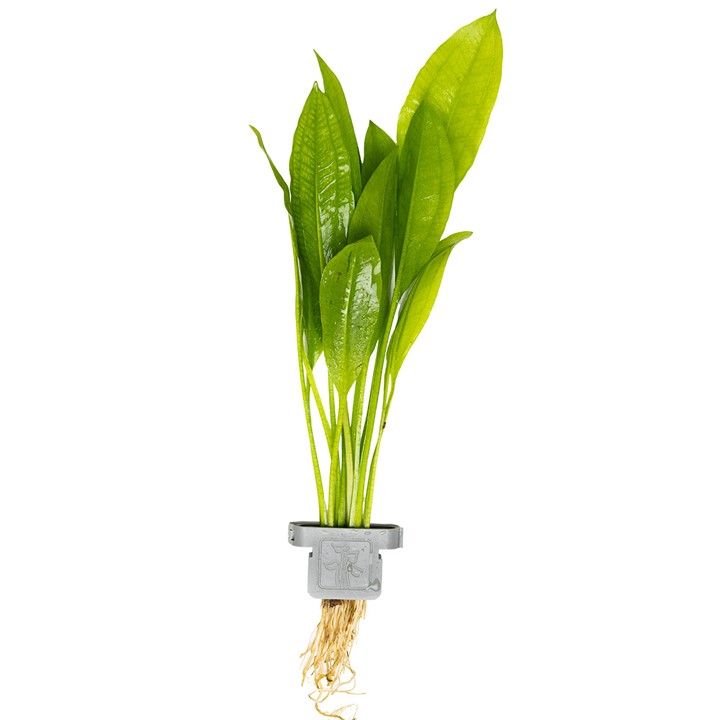
At a glance: Amazon sword care
Compiled reference information. Review the care notes and original sources below.
What temperature is listed for Amazon sword?
The compiled profile lists 22.0–28.0 °C for Amazon sword (Echinodorus grisebachii). Check the original sources below for context and differing recommendations.
What tank size is listed for Amazon sword?
The profile lists a minimum tank volume of 10.0 US gallons (40.0 liters). Volume alone does not establish suitability; consider dimensions, group size and other inhabitants alongside the full care notes.
What pH is listed for Amazon sword?
The compiled profile lists a pH of 6.0–8.0. Review the cited care sources alongside the other water parameters in this profile.
Natural habitat
The Amazon Sword Plant thrives in freshwater rivers, lakes, and ponds of the Amazon River Basin in tropical regions of Central and South America. It is commonly found in various aquatic environments, showcasing adaptability to different water conditions.
Where they are found
The species is native to several countries in South America, including Brazil and Bolivia, as well as the Caribbean island of Cuba. It occurs in a variety of habitats, predominantly in freshwater systems where it can flourish amid the biodiversity of the Amazon.
Aquarium care
In an aquarium setting, the Amazon Sword requires a minimum tank size of 90 liters to thrive. It benefits from bright, indirect lighting and should be planted in nutrient-rich substrate. Regular water changes to maintain good water quality are essential, and additional CO2 can boost growth, although it is not strictly required.
Feeding
Amazon Sword Plants are primarily detritivores, benefiting from nutrient-rich substrates and supplements such as root tabs and iron-containing fertilizers. Maintaining good water quality will enhance growth and color.
Compatibility
The peaceful nature of the Amazon Sword makes it compatible with a variety of community fish. However, care should be taken to ensure the tank isn’t overcrowded, allowing enough light for the plants and preventing competition for space.
Breeding
Echinodorus grisebachii primarily reproduces through vegetative propagation, sending out runners that can establish new plants. However, providing optimal conditions also allows for flowering under the right circumstances, resulting in seeds.
Sources
Compiled from multiple independent care sheets — not copied from a single site.