Catalog / invertebrates / Amano shrimp
invertebrate · Atyidae
Amano shrimp
Caridina multidentata
Wild range: East Asia (Asia)
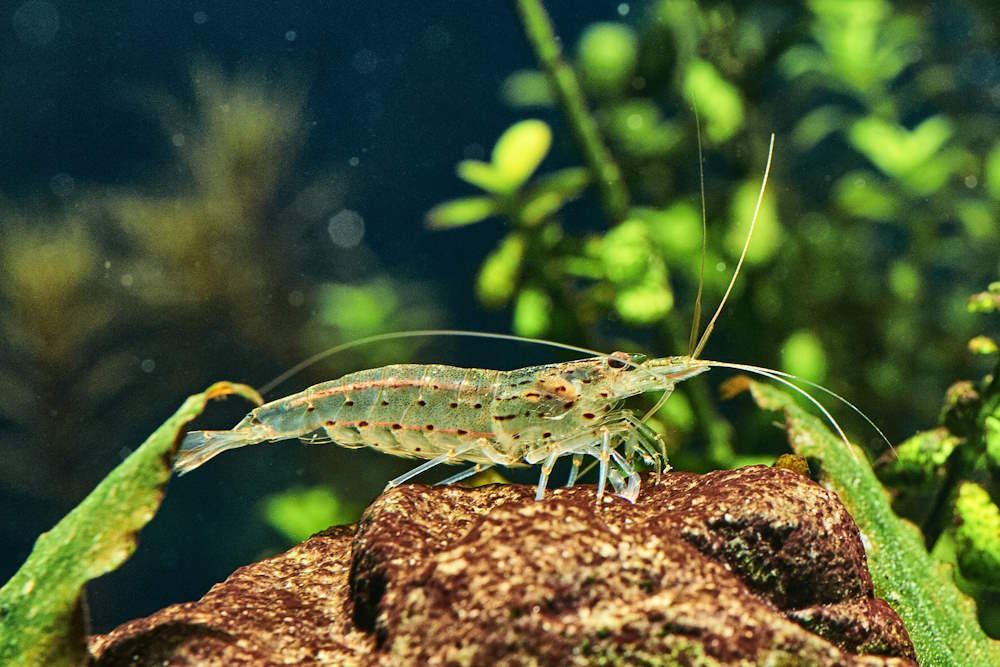
At a glance: Amano shrimp care
Compiled reference information. Review the care notes and original sources below.
What temperature is listed for Amano shrimp?
The compiled profile lists 17.8–26.6 °C for Amano shrimp (Caridina multidentata). Check the original sources below for context and differing recommendations.
What tank size is listed for Amano shrimp?
The profile lists a minimum tank volume of 10.0 US gallons (37.9 liters). Volume alone does not establish suitability; consider dimensions, group size and other inhabitants alongside the full care notes.
What pH is listed for Amano shrimp?
The compiled profile lists a pH of 6.5–8.2. Review the cited care sources alongside the other water parameters in this profile.
Natural habitat
The Amano Shrimp (Caridina multidentata) is commonly found in freshwater and brackish environments primarily in Japan and Taiwan, typically inhabiting areas rich with filamentous algae and biofilm. They are social creatures often found in large aggregations along water bodies.
Where they are found
In the wild, Amano Shrimp undergo an amphidromous life cycle where adults live in freshwater while their larvae develop in brackish or marine conditions. This unique lifecycle makes breeding in captivity challenging as the freshwater environment does not support the development of the larvae.
Aquarium care
Amano shrimp are hardy and easy to care for, requiring a minimum tank size of 40 liters with gentle water flow. They thrive in well-established tanks where algae and biofilm are plentiful, but high-quality supplemental feeding is recommended in less mature tanks. Regular water changes and monitoring of parameters such as pH and hardness are essential for their health.
Feeding
These shrimp primarily feed on algae, biofilm, and commercially available shrimp pellets. They are effective algae grazers and will help keep the aquarium clean when provided with a varied diet, including plant matter and specialized food for invertebrates.
Compatibility
Amano shrimp are peaceful and compatible with most community fish. They should be housed in groups to ensure their social needs are met, and they can coexist with gentle tank mates. Be cautious with aggressive fish that might view them as food.
Breeding
Breeding Amano Shrimp in captivity is complex, requiring a separate brackish water tank for larvae development. While females do carry eggs, the hatching larvae require brackish conditions to survive. Most enthusiasts find it easier to purchase new shrimp rather than attempting to breed them.
Sources
Compiled from multiple independent care sheets — not copied from a single site.