Catalog / fish / Agassiz's dwarf cichlid
fish · Cichlidae
Agassiz's dwarf cichlid
Apistogramma agassizii
Wild range: Amazon River basin (South America)
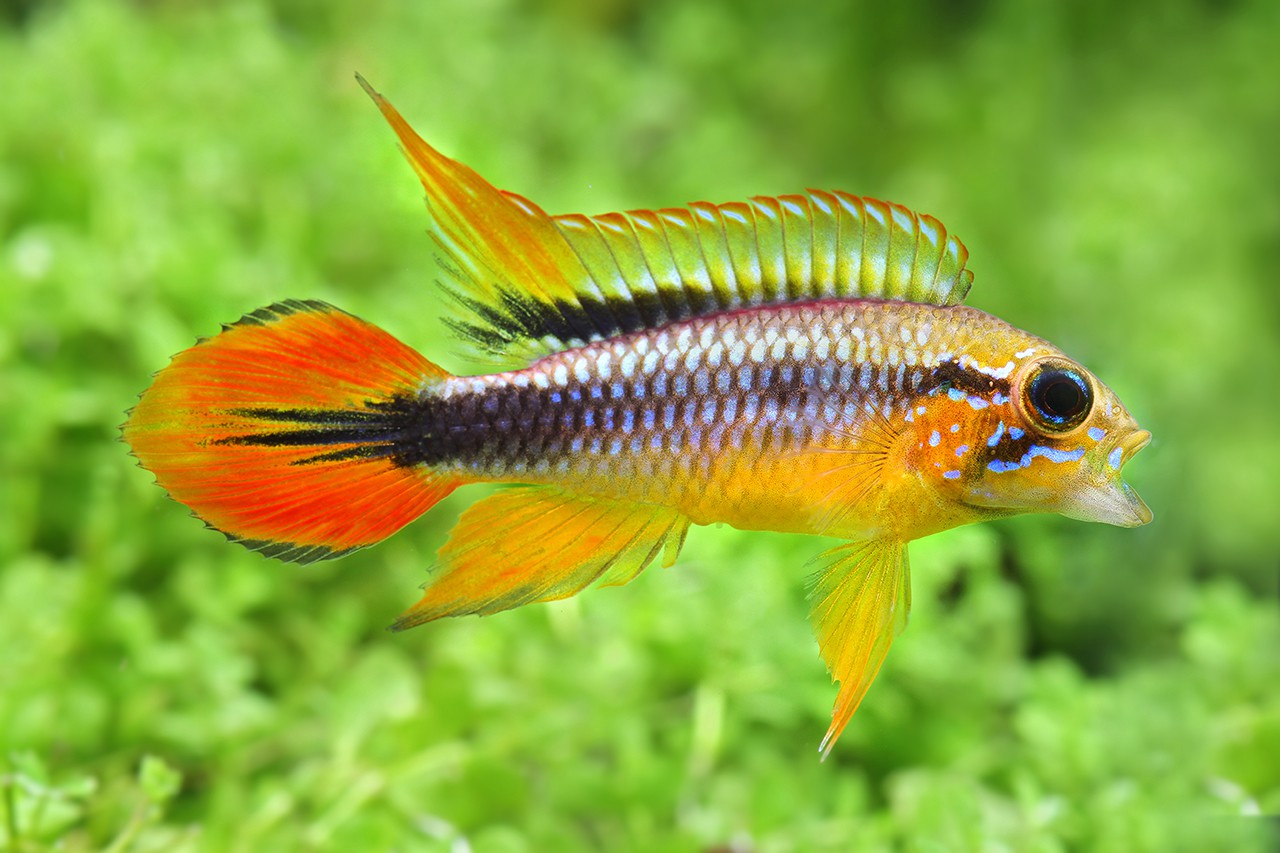
At a glance: Agassiz's dwarf cichlid care
Compiled reference information. Review the care notes and original sources below.
What temperature is listed for Agassiz's dwarf cichlid?
The compiled profile lists 24.0–29.0 °C for Agassiz's dwarf cichlid (Apistogramma agassizii). Check the original sources below for context and differing recommendations.
What tank size is listed for Agassiz's dwarf cichlid?
The profile lists a minimum tank volume of 21.0 US gallons (80.0 liters). Volume alone does not establish suitability; consider dimensions, group size and other inhabitants alongside the full care notes.
What pH is listed for Agassiz's dwarf cichlid?
The compiled profile lists a pH of 5.0–7.5. Review the cited care sources alongside the other water parameters in this profile.
Natural habitat
Apistogramma agassizii is found in blackwater habitats characterized by low light and a complex environment of submerged structures, such as roots and fallen branches. This environment provides shelter and breeding sites for the species.
Where they are found
This cichlid is native to the Amazon River system, particularly within Brazil, where it inhabits blackwater and clearwater habitats. Its presence in the wild signifies a diversity of freshwater ecosystems, which are crucial for maintaining high biodiversity.
Aquarium care
Aquarium maintenance for Apistogramma agassizii should simulate their natural habitat, including a gentle flow, slightly acidic to neutral pH, and a substrate consisting of sand or fine gravel. Regular water changes and careful monitoring of water quality are essential to keep this species healthy.
Feeding
Apistogramma agassizii is an omnivore and thrives on a varied diet consisting of high-quality flake food, frozen or live food such as brine shrimp, and finely cut vegetables like spinach.
Compatibility
While Apistogramma agassizii can be kept with peaceful species, they can exhibit territorial behavior, especially during breeding. To ensure harmony in a community tank, it’s best to avoid pairing them with larger or overly aggressive species. Ideally, they should be housed with other peaceful, smaller fish.
Breeding
Apistogramma agassizii is a substrate spawner. Males display vibrant colors to attract females, and when they pair, they may engage in elaborate courting displays. After laying eggs, the female guards the brood and provides care until the fry can swim independently. It is advisable to have a separate breeding tank to ensure the safety of the fry and preventing potential aggression from other fish in a communal tank.
Sources
Compiled from multiple independent care sheets — not copied from a single site.