fish · Cichlidae
Acei cichlid
Pseudotropheus acei
Wild range: Lake Malawi (Africa)
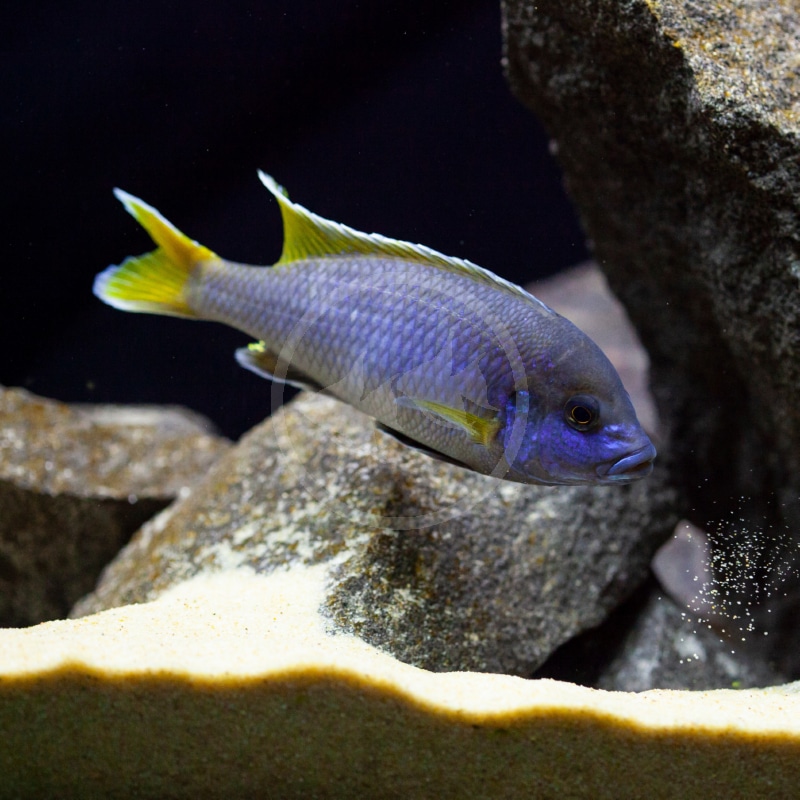
At a glance: Acei cichlid care
Compiled reference information. Review the care notes and original sources below.
What temperature is listed for Acei cichlid?
The compiled profile lists 22.0–28.0 °C for Acei cichlid (Pseudotropheus acei). Check the original sources below for context and differing recommendations.
What tank size is listed for Acei cichlid?
The profile lists a minimum tank volume of 40.0 US gallons (151.4 liters). Volume alone does not establish suitability; consider dimensions, group size and other inhabitants alongside the full care notes.
What pH is listed for Acei cichlid?
The compiled profile lists a pH of 7.0–9.0. Review the cited care sources alongside the other water parameters in this profile.
Natural habitat
Pseudotropheus Acei are predominantly found in the northwestern regions of Lake Malawi, where they inhabit rocky environments. Their vibrant blue and yellow colors draw many aquarists to them. They are territorial and can be aggressive if not provided with ample space, yet many aquarists have success with higher populations to distribute aggression.
Where they are found
This species is endemic to Lake Malawi and thrives in its rocky environments, often found in areas where water flow is moderate, providing them access to plenty of algae and detritus.
Aquarium care
When keeping *Pseudotropheus sp. Acei*, a larger aquarium with plenty of hiding spaces, such as caves created from limestone or driftwood, is recommended. It's essential to maintain stable water parameters, especially the pH and hardness, using an aragonite substrate, which helps in achieving the necessary high pH levels.
Feeding
As herbivores, Acei Cichlids primarily consume algae and various types of aquatic vegetation. It is recommended to feed them herbivore flakes or pellets with supplements of algae wafers to ensure they receive adequate nutrition.
Compatibility
*Pseudotropheus sp. Acei* can coexist with other similar-sized cichlids as long as enough space and shelter are provided. Due to their semi-aggressive nature, ensure a compatible community to reduce territorial disputes.
Breeding
Breeding involves the typical mouthbrooding behavior seen in Mbuna species. Males will court females and, once the female lays eggs, she will carry them in her mouth until they hatch.
Sources
Compiled from multiple independent care sheets — not copied from a single site.